
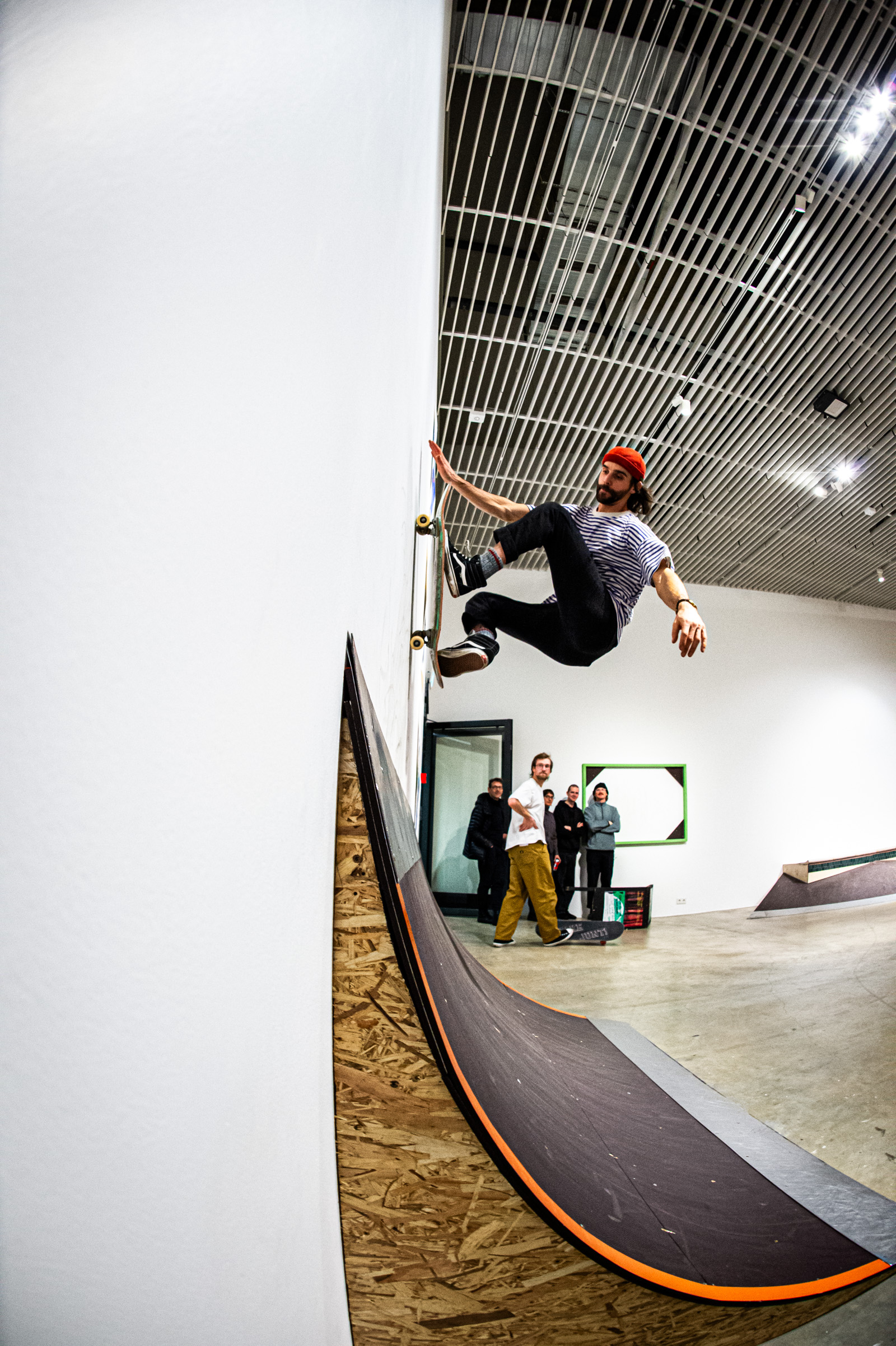
Éric-Olivier Thériault with fs wall ride.
So we went sniffing around WE NEED MORE INDOOR SPACES, currently screaming from the walls of the EKA Gallery. Somewhere between the plywood fumes and righteous frustration, we figured it was the perfect moment to collar a fresh face in the Tallinn skate jungle: Eric-Olivier Theriault. No long speeches, no safe zones—just a straight-up question-and-answer brawl. So give the man a proper welcome, crack your knuckles, and dive headfirst into what the dude has to say.
Nightwood. First of all, let’s start with a short introduction.
Who are you? Age? Background? How did you end up in art—and why Estonia, why now?
And let’s address the elephant in the room: was the Sasquatch lost somewhere in Canada? Or did you finally find it in the form of Jaagup? Because you definitely ran into one wild specimen.
Éric-Olivier Thériault. Nico, this is sick. Thanks for making space in the blog for art stuff. I’m 34, from Quebec, Canada, and I fell in love with skateboarding the summer after my first time snowboarding, when I was eight. So yeah, that’s a 22-year-long love affair at this point.
I probably ended up in art because of skateboarding, actually, also because I’m expressive and opinionated and mostly because I love making and building things myself. I’ve travelled a bunch and realized the only thing that really makes sense to me, “when I grow up,” is to follow my craft skills. Haha. And I love the Sasquatch reference, there’s actually a Burton Snowpark in Vermont named after that beast. But the real Sasquatch is definitely in Estonia somewhere… probably hiding north of Telliskivi, near Skoone Bastion perhaps. Maybe that was what was calling me here.
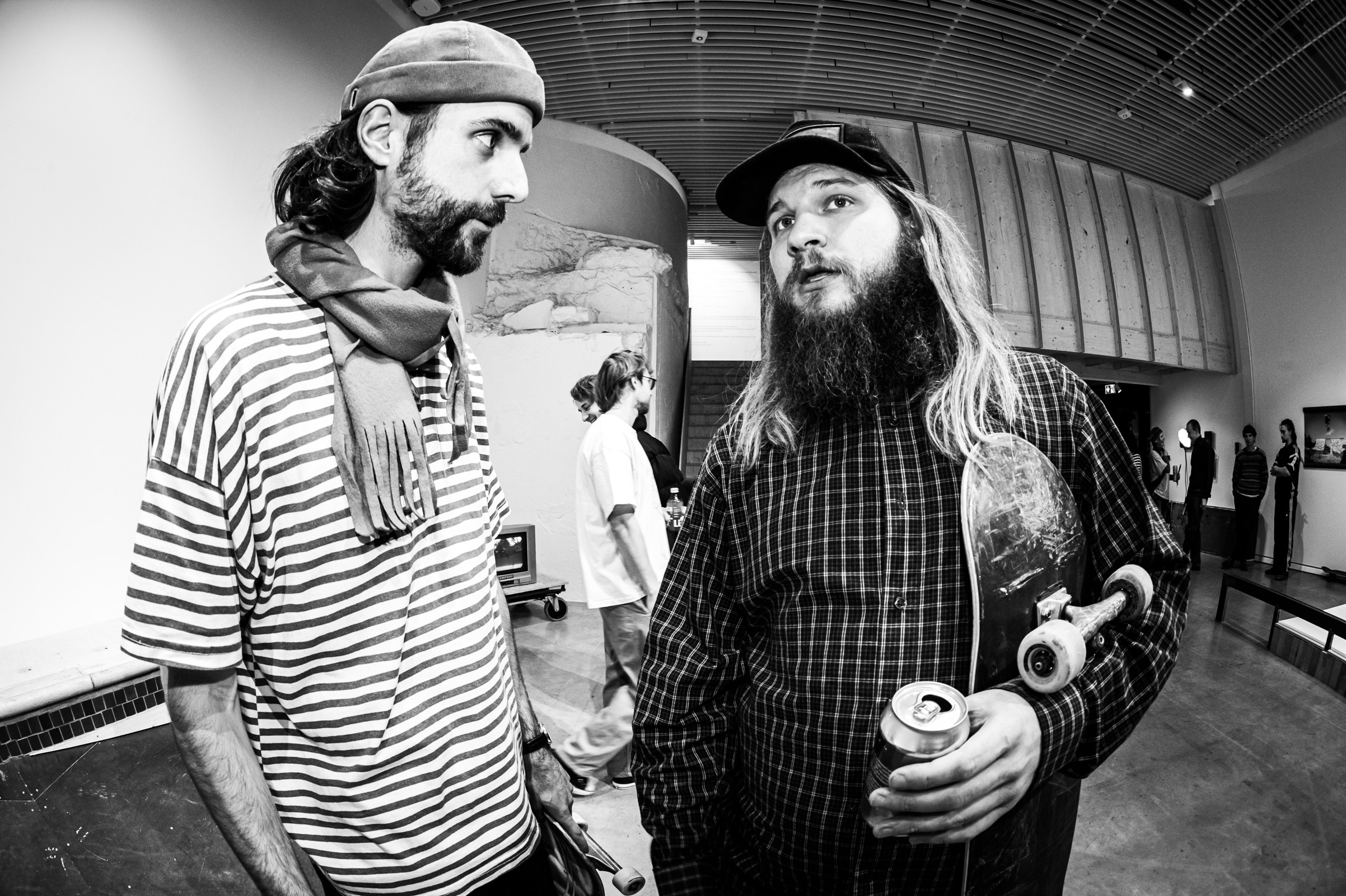 Éric-Olivier Thériault and Jaagup Mägi.
NW. We talked earlier about you settling in Estonia for two years.
Now that you’ve been busy finding your footing and starting the semester, have you had time to look around and get a sense of the Estonian art scene? What are your feelings about it so far? Any coup de foudre in a native artist ?
EOT. I feel like Estonian art, craft, and culture are super cohesive; it seems like there’s real communication between galleries, museums, and the public, but maybe that’s just my new-relationship energy with Tallinn talking right now. Still, it feels genuine. Knowing how many artists were silenced during the Soviet era, the shift now feels undeniable. Artists here are blooming, art is supported, and it is wonderful to see.
Walking from Vanalinn to Linahall, I’ve definitely had a couple of ‘coup de foudre’ moments already— the artistic subtleties of the city are everywhere within the built environment. I find it inspiring to be here; there’s so much talent. I really admire the deep knowledge of fine craft, especially in things like glassblowing and blacksmithing here at EKA. I’m thinking of Rait Lõhmus and Taavi Teevet. On the contemporary side, Edith Karlson and Laura Põld are two of my favourites for their deep exploration of materiality.
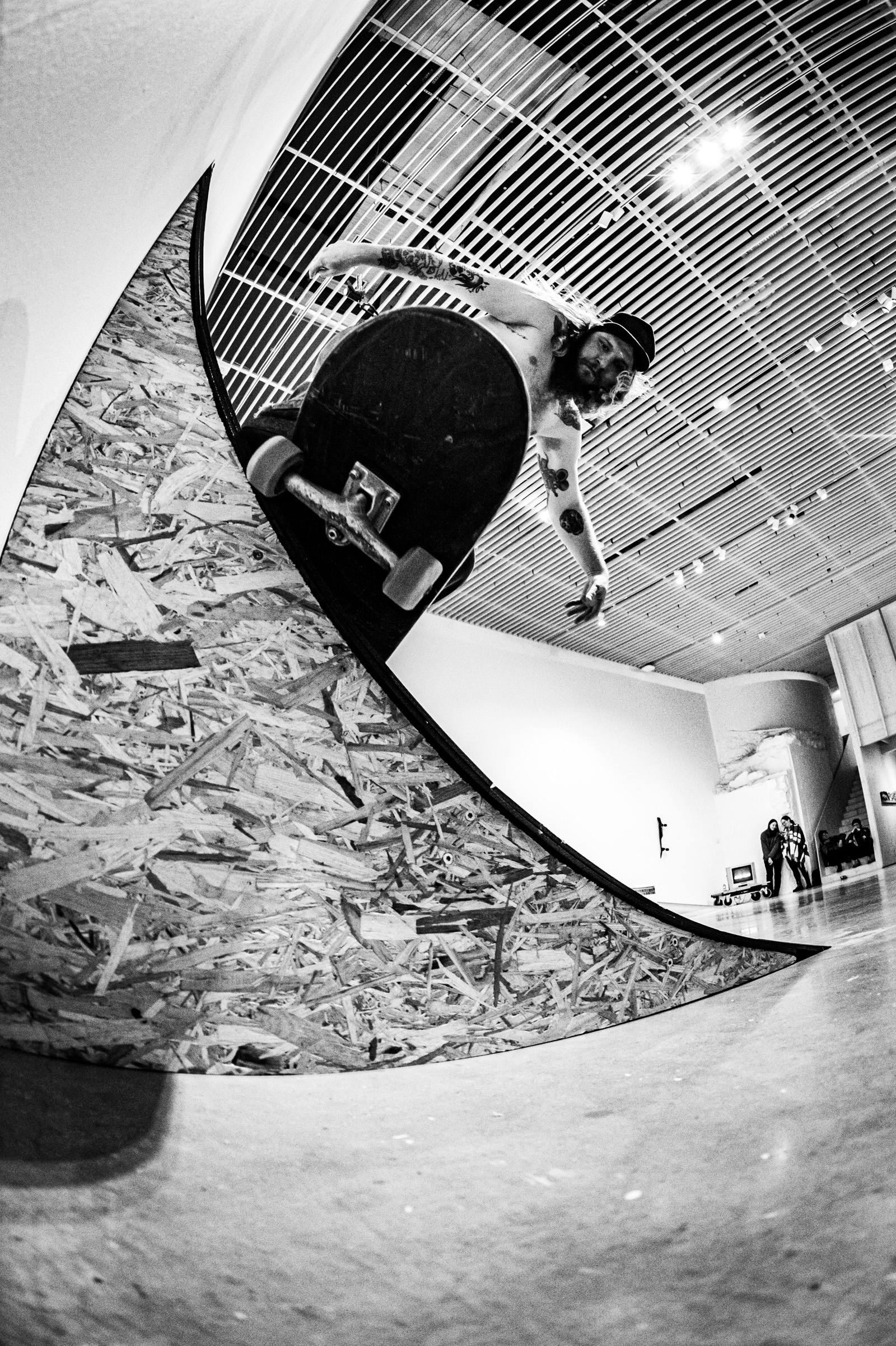
Jaagup Mägi rocks the plywood.
NW. Like all skate nomads eventually do, you ended up at the local DIY park, Krulli.
How was that first experience? Any thoughts on the Estonian skateboard community? DIY spirit to the max?
EOT. The story of how I ended up at Krulli 1.0 is kind of unreal. A couple of days after landing in Tallinn, my host took me to Cabaret Volta for a night of experimental sound art. Total chaos in the best way, highly recommend it if you’re into weird noises and good times. I had so much fun that the next day I went back just to see the place in daylight. Started paying attention to all the details around the venue, and because I love urban exploration, I wandered behind the building.
There was this sketchy outdoor hallway space between two buildings that pulled me in like a magnet. I was walking slowly, looking up at some chimney-like structure, and suddenly I heard one of the most familiar sounds in the world: someone skating a ramp. Not just any ramp, though, it was wood with a metal coping, unmistakable. Turns out I was standing in this liminal zone between one of Tallinn’s best music venues and one of Estonia’s most iconic indoor skateparks: Krulli 1.0.
Didn’t even have my board, so I hopped a tram back to my friend’s place and returned within the hour. I only skated the ramp outside at first, not knowing the park inside was free, and that’s where I met Iago Bresciani for the first time. He’s not local — a foreigner like me, but I’ve rarely seen someone so deeply plugged into a scene. Right then, I knew the locals here were warm and welcoming.
The next time I hit Krulli, it was windy and raining, and stepping inside felt like entering another dimension. I love wooden indoor parks, the pop is different, way more forgiving, and Krulli had the perfect balance between normal features and straight-up DIY ones. That super-wide quarter with pool coping, the street art wallride, Lauri Täht’s wall of fame, Jaagup Mägi’s humongous hanging sculpture — all of it gave the place this raw spirit that felt baked into the building itself.
I already miss it like crazy, and I only skated it less than ten times. Can’t even imagine what it meant to the locals and the younger generation.
Rest in peace, Krulli 1.0. but I know Krulli 2.0 is on its way. Can not wait to see what the local heroes are cooking for us all!
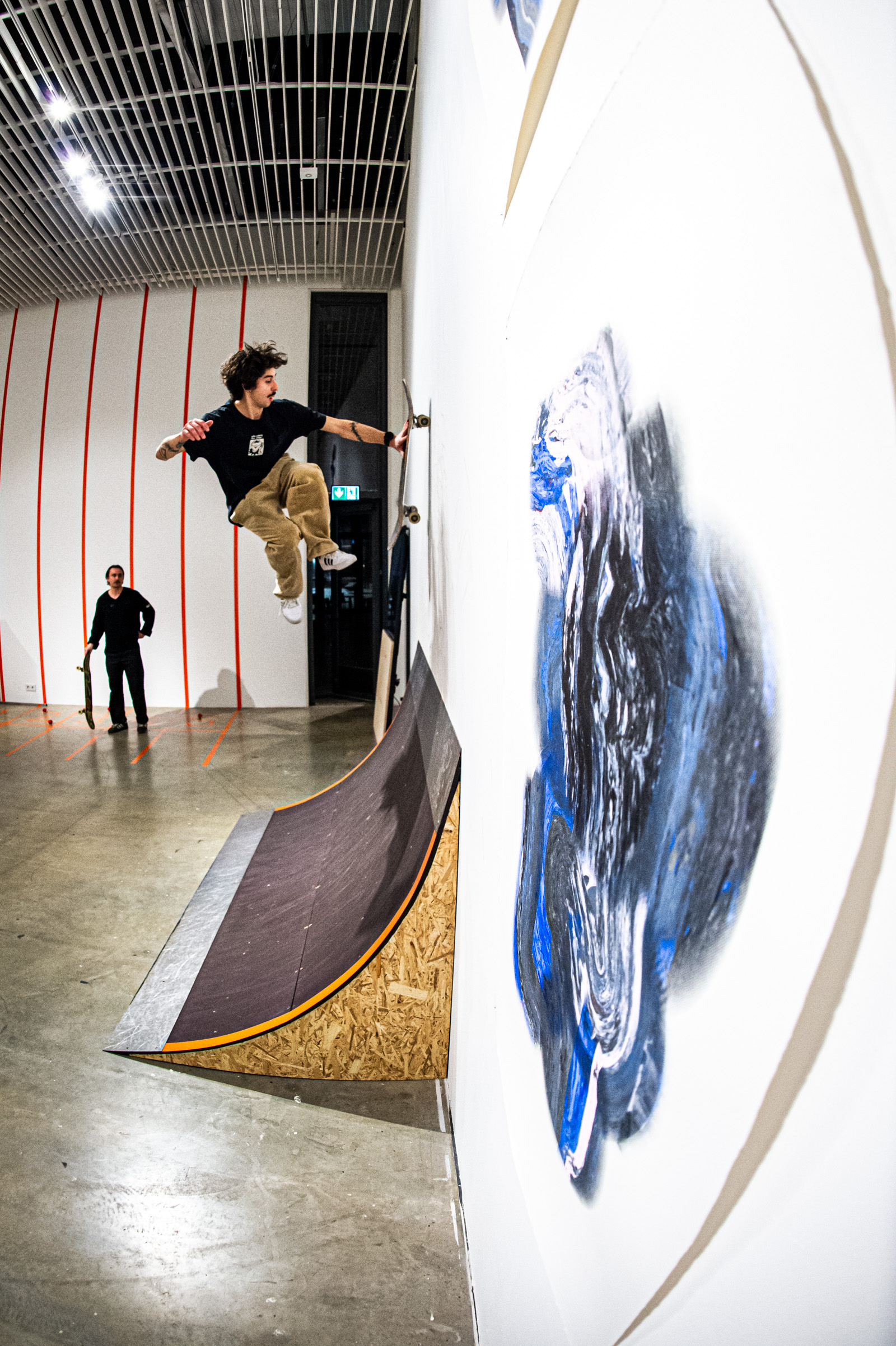
Iago Bresciani flying next to Frank Abner’s (in the back) art.
NW. You’re now studying Sculpture at EKA. How is that going? What surprised you the most so far?
EOT. That’s right, I’m doing a Master’s in Contemporary Art. It’s different in a good way, and I’m learning how to navigate it day by day. Some days feel amazing, other days the program feels heavy, but I’m definitely trying to make the most of it. Being far from my roots isn’t the easiest, and since the program doesn’t really have a strict structure, you’ve gotta show up, put yourself out there, and build your own community.
I stay busy making work and getting involved in projects like Uus Rada Galerii, a non-hierarchical experimental space. Honestly, it’s not just the MACA program*, it’s the people at EKA, professors and technicians, and the facilities that really make it special. Contemporary art feels like it’s at a turning point right now, and I’m stubborn enough to believe in a vision that’s slowly becoming real, even if everything feels a little precarious sometimes.
Super grateful to the Estonian Academy of Arts for trusting the process, keeping contemporary art alive, and, by extension, letting me be part of their community.
*MACA program is a Master of Contemporary Art (MACA) at the EKA in Tallinn is a two-year, international English-language program designed for emerging artists.
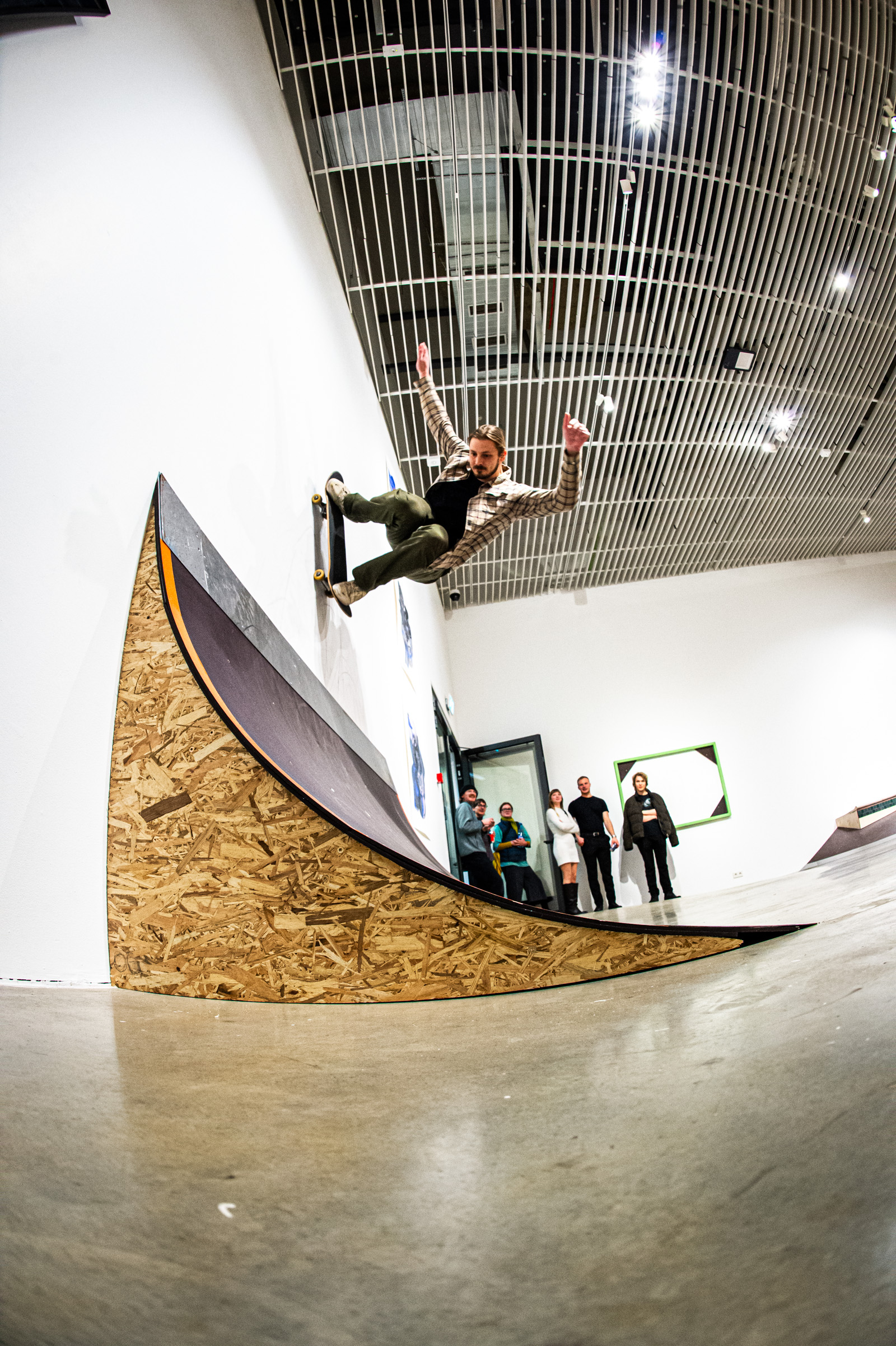
Siim Sild, Wall-ride.
NW. How did the collaboration with Jaagup start? At what point did it turn into building an exhibition together?
EOT. When I first stumbled onto Jaagup’s studio, I instantly knew it belonged to a skateboarder-artist. No question. The energy was just there. But it took a minute before we met officially. After my first visit to EKA Gallery in September 2025, the coordinator showed me documentation from a past show at ArtDepoo Galerii. There was this half-pipe ramp made out of thick metal strips installed right in the gallery space. Heavy stuff.
Later on, I started digging and came across Jaagup’s name, but I still had no idea what he looked like. Then after The Last Dance, I connected the dots by watching a recap video on YouTube. That’s when it hit me: the massive skateboard deck installation hanging over everyone’s heads at Krulli 1.0 and that metal ramp at ArtDepoo were both his.
Next time I saw him in the EKA sculpture studio, I straight-up ran over like a kid to introduce myself. I’ll probably remember that moment forever, that kind of excitement doesn’t happen often. Felt like I was standing in front of some skate god or something. Haha.
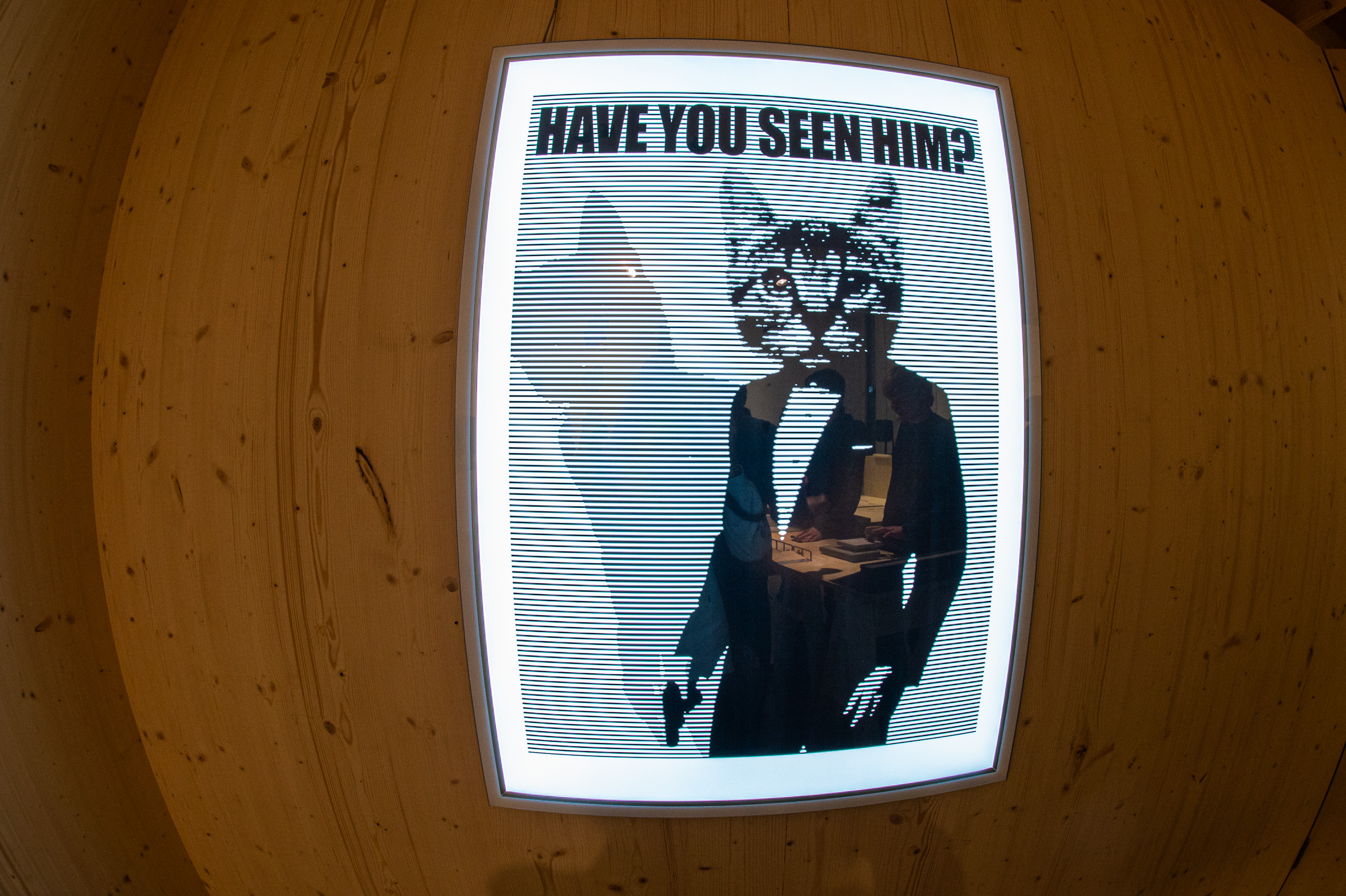
Maik Grüner’s piece in the exhibition.
NW. The local skate scene is full of hidden talents. How did you discover the artists involved in the exhibition?
EOT. I fully agree, talents that exist in a very secluded crowd, and we like it that way dont get me wrong, but sometimes it’s nice to celebrate these talents outside of the “niche”, and this is what we were trying to do with this exhibition. At first, I thought an open call would do the trick, but realistically, in Estonia, word of mouth is key. So it ended up being a mix of both. Jaagup and I were aiming for ten artists total, including ourselves, meaning eight open spots, and we filled them in under 15 days. We were still getting applications up until the day before the opening. Which means there are more skaters interested in showing their art out there!
Skateboarding is such a tight-knit world that news travels fast. A perfect example is how you and I even linked in the first place, at the Timeland premiere at Von Krahl. We talked for like ten minutes before the screening, followed each other on IG, and that was it. Easy as.
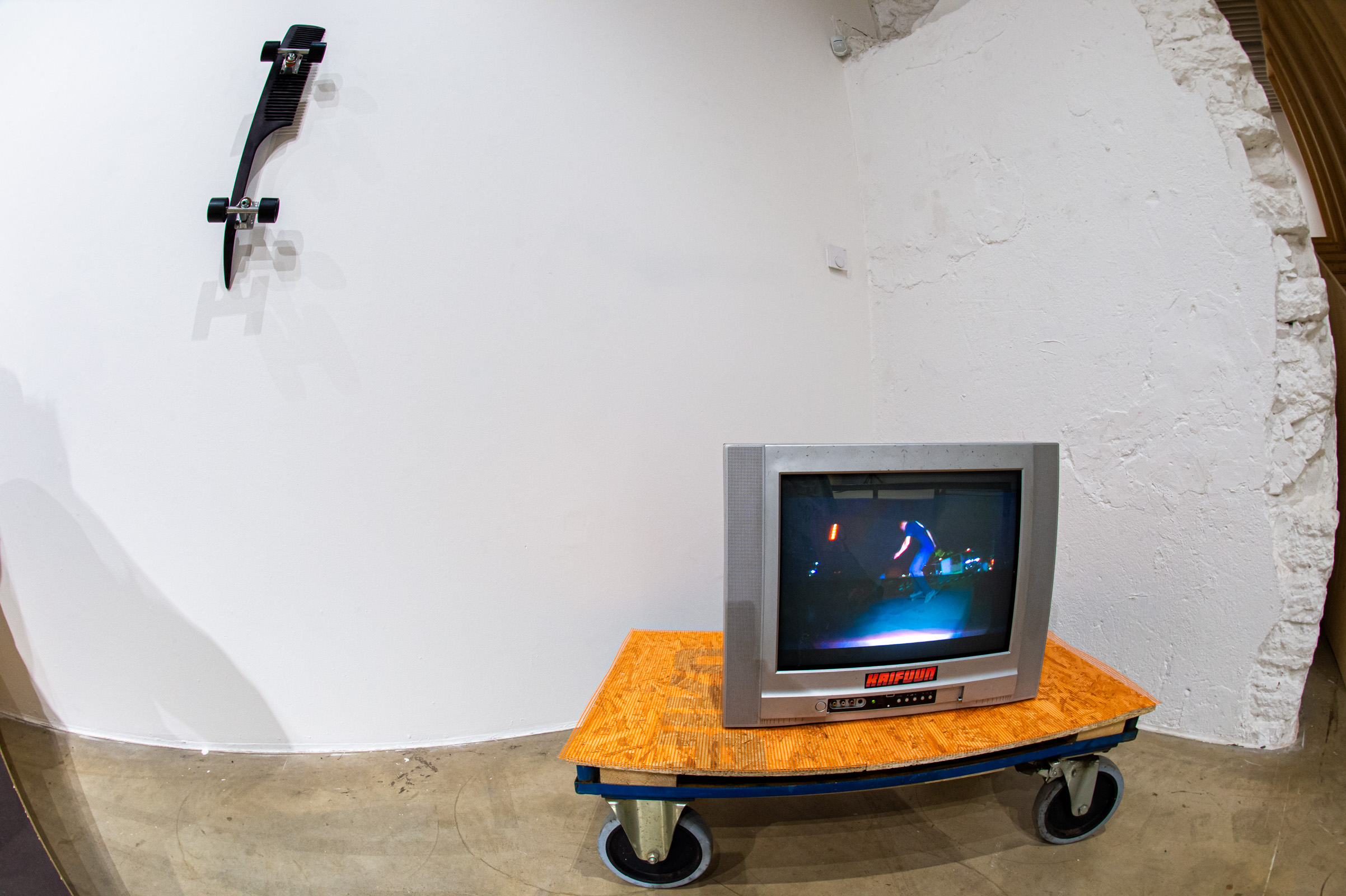 Talking of “Timeland” you can witness some good selection from Kaifuun, Siim Sild, next to Jaagup Mägi’s Comb the Streets.
NW. Let’s talk about the exhibition itself. Skaters are street cats—drawn to the city, architecture, and environment. Now winter has hit, wheels are stuck, and suddenly you offer a legitimate shelter for homeless freaks to gather—inside an art institution. Hats off.
Bringing skateboards into the academy as an art form is a bold move. What kind of feedback have you received from EKA so far? Is this one of the first exhibitions there that treats skateboarding not as a sport, but as a living culture? What’s the deeper idea behind that choice?
EOT. I love the idea of a living culture, and yeah, skateboarding is alive even when winter hits. Coming from a place with similar weather, four seasons and all that, I remember growing up when skating wasn’t as accessible in fall and winter. If I wasn’t geared up on a snowboard or snowskate, I was deep into indoor skate life: reading skate mags, watching videos, assembling and disassembling boards, doing little repairs, messing with grip tape designs… visualizing tricks. Drawing skate stuff, building fingerboard parks out of cardboard boxes, shout out to Andrew Kuus-Hill and his Gifted (2025) finger skatepark table inside the exhibition space. I believe somehow I was reconnecting with that energy for this art show.
That’s really where the idea for the exhibition came from: creating a place that feels homie and wholesome around skateboarding with a contemporary touch. Everything “indoor skate” in my head starts in your parents’ basement, the garage, the living room. Jaagup and I took that energy, added a little contemporary spice, mixed in some French and Estonian flavour, and built a safe space for the local skate community. It’s literally a childhood dream colliding with a young adult dream and somehow becoming real, and super ephemeral.
The feedback from EKA has been super positive so far, not totally sure how they feel about skateboard noise on Wednesday night for the “After Hours” session, but otherwise it’s been really well received. I’ve heard people say it breaks the coldness of the gallery and makes the space feel inviting and singular, which is all gold in my book. There was even a family at Sunday night’s session, who felt like their first time in a place like that AKA tall white walls, concrete floor, fluorescent lights AKA a gallery space. Bridging two worlds. Mission accomplished.
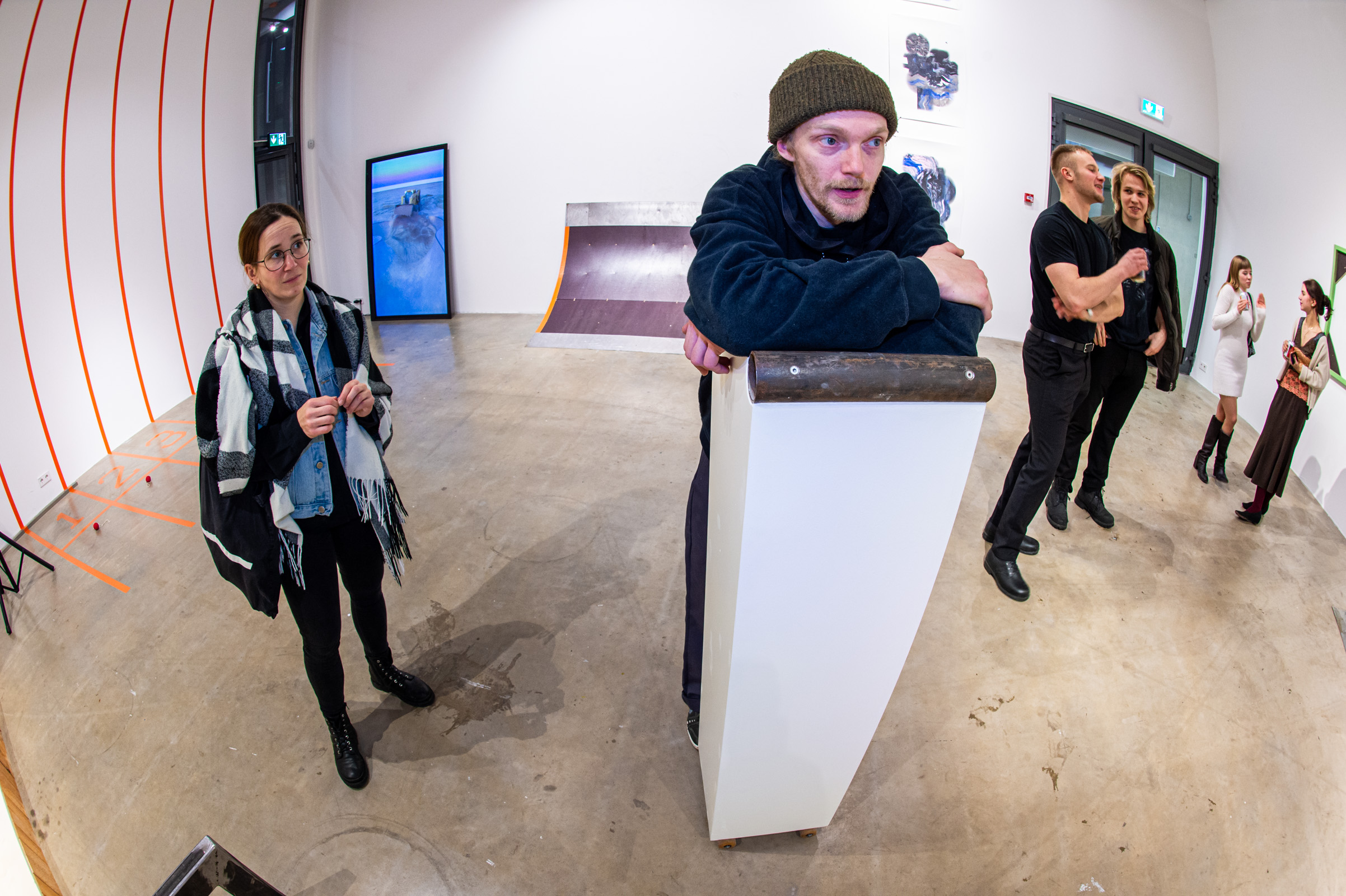
Kristo Õismets testing Reigo Nahksepp “Object of desire” ? Liidia abides.
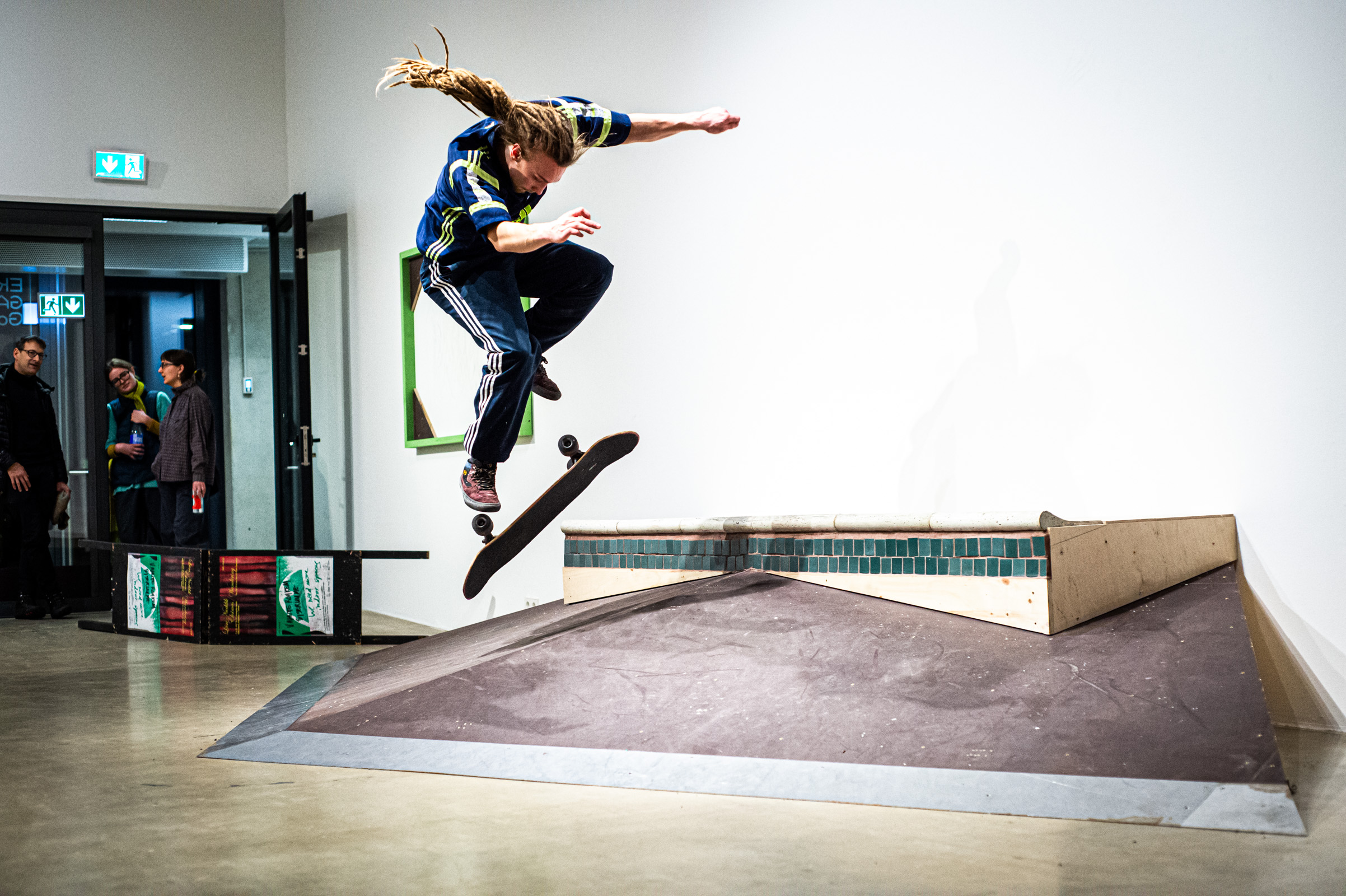
Looking for art ? Reigo Nahksepp delivers on four wheels aswell.
NW. DIY is often meant to disappear. Do you have a statement or thoughts on that contradiction?
EOT. DIY spots never really die. They might disappear physically, but the community is too radical and too proud of what they’ve built for that energy to vanish. There’s always documentation: photos, videos, drawings, archives, and, more importantly, memories. Building a DIY spot takes thought, care, time, and people, and that kind of work sticks deep in your core. That’s how it stays alive. The feeling does too.
Like, I’m sure someone who grinded P45 lets say two years ago, or boardslided-to-fakie the BIG-O in Montreal in the ’90s, could still remember exactly how their feet felt rolling off it. So yeah, if the the spot changes, moves, becomes abandoned or even completely gone, the raw material, the footage, the images, the stories, the embodied memory of the place — that stuff sticks around way longer.
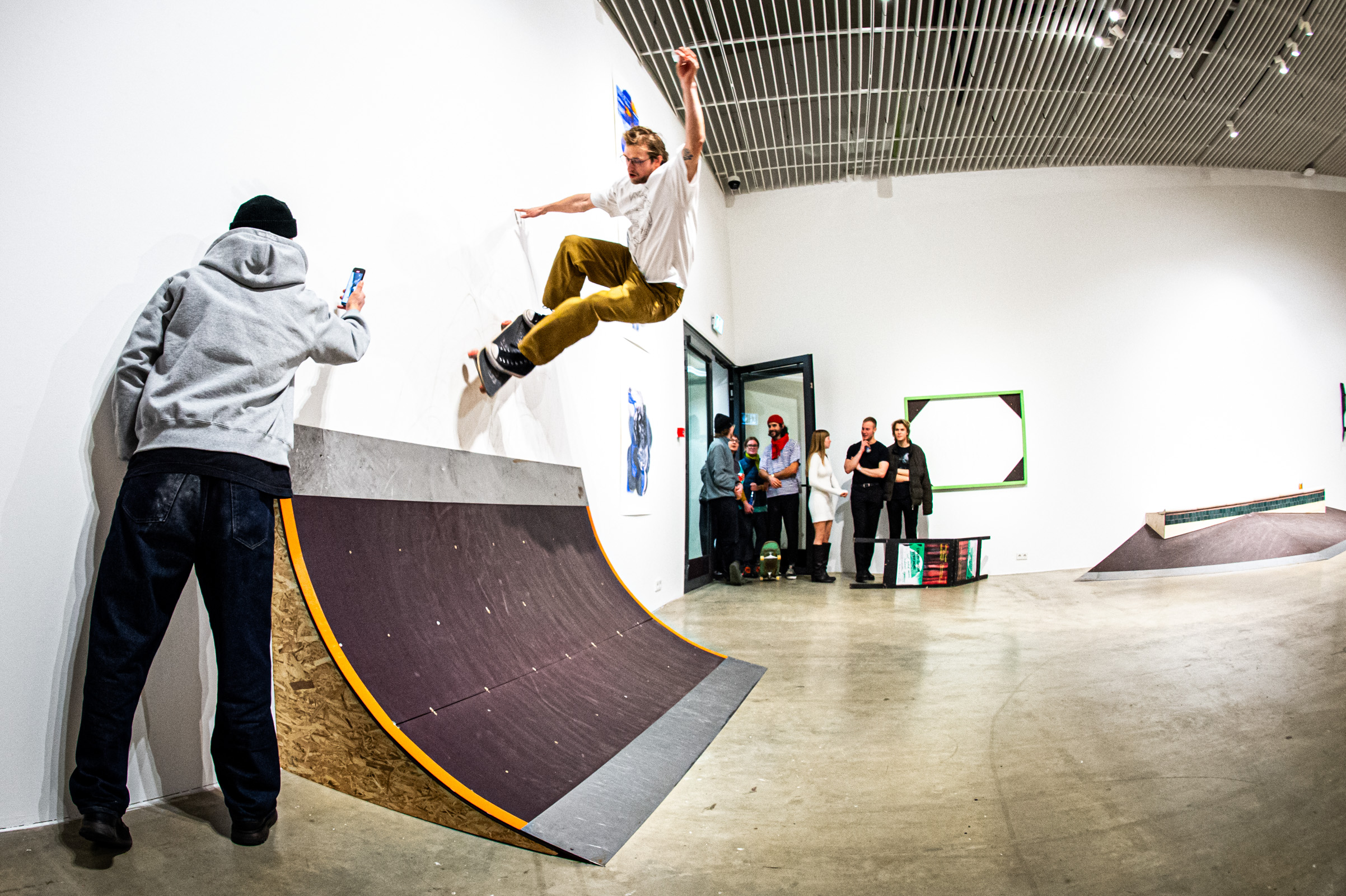
Meelis Erm, fs wall-ride.
NW. Krulli is gone—but those were some of the best years the Tallinn scene has seen in a long time. Now, a “next Krulli” is slowly taking shape. Do you think the government needs to step in and support these spaces, or should the scene stay independent to remain true to its roots?
EOT. That’s a really good question and a tricky one. Honestly, part of me wants to say skateboarding should stay fully independent, but another part of me would love to see governments financially backing skateboarder-led projects and actually trusting the vision and knowledge that comes from within the scene. Exactly like what’s happening right now with Krulli Kvartal and Krulli 2.0. That kind of support is undeniable; it makes a massive difference, and from what I understand, that’s private investment which is huge.
It’s kind of wild to me that in 2026, skateboarding still isn’t fully recognized by governments, or when it is, parks get built just to check a box on a civic to-do list. Like, “we did the skatepark thing that people asked, now where do we put the new hockey rink?” I get that public funding usually goes toward outdoor parks, but let’s be real in Estonia, outdoor parks are skatable for only a little fraction of the year. Why not invest in indoor spaces instead? Something durable, current, and actually aligned with modern skate culture. The government could step in with basics — space, transit access, a material bank, heat, electricity — and let the core skate scene handle the build and design. That combo could seriously change things.
In my book, skateparks have to be built by skateboarders. We’re the experts in how they actually work. In Canada, for example, Charles Deschamps — one of Montréal’s key figures in the skate scene, has recently shaped a lot of the park landscape. Don’t quote me, but he’s basically a skatepark architect, and his blueprints are heavy and stylish; skaters love the flow and the thinking behind them. That’s exactly what I mean by real collaboration between the government and skateboarding’s core.
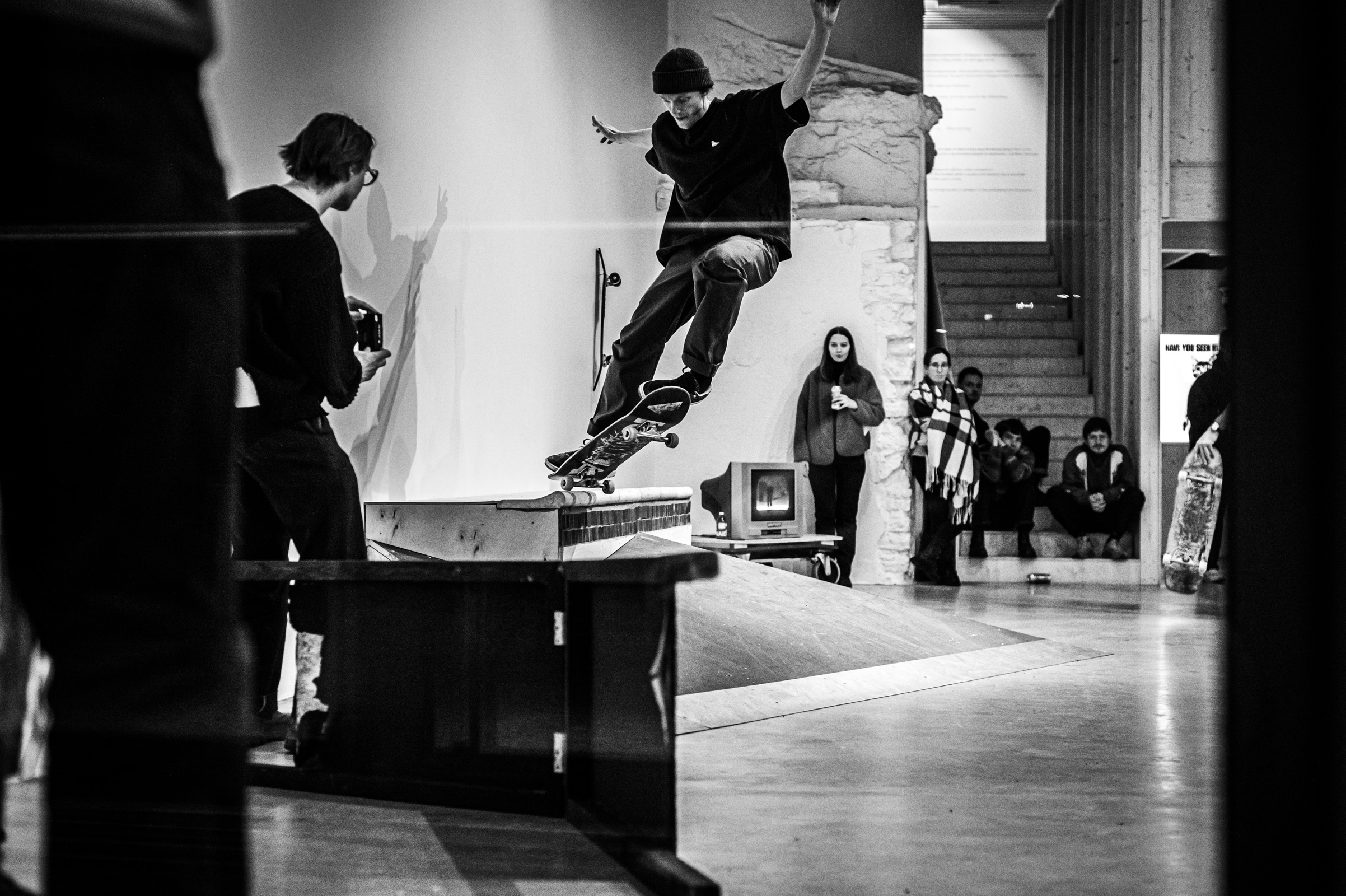
Kristo Õismets.
NW. Did we miss anything? Is there something you’d like to add?
EOT. It might sound a little formal, but I really want to shout out the support of Kaisa Maasik-Koplimets, KULKA, and the university itself, EKA, for being open, trusting the process, and backing this exhibition. That support means everything.
And while we’re here: Krulli Kvartal has been holding it down for Krulli 2.0 since the closure. They’ve got a new space locked in and are working hard on bringing another banger of a skatepark to the area. We’re seriously hyped to see what Kristo Õismets, Lauri Täht and Raul Urberg are cooking together, can’t wait for that grand opening.
Until then, you’re welcome to come through the gallery and check out the work of 10 different artists until February 15, 2026, and you can skate the same space after gallery hours on Wednesday (18:00-21:00) and Sunday evenings (16:00-20:00)!
check the link for more info: HERE
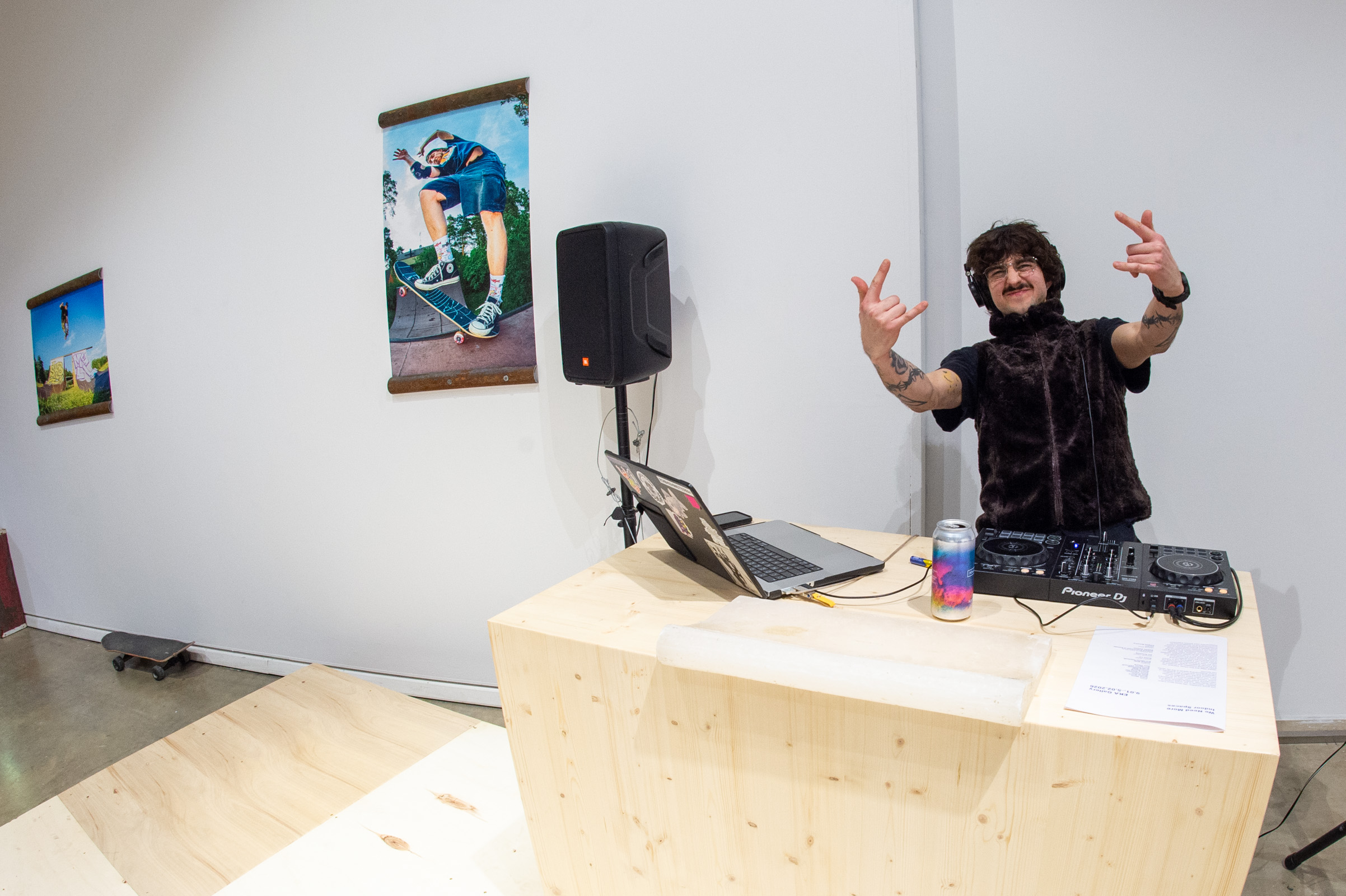
Iago Bresciani was dropping the beats during the opening.
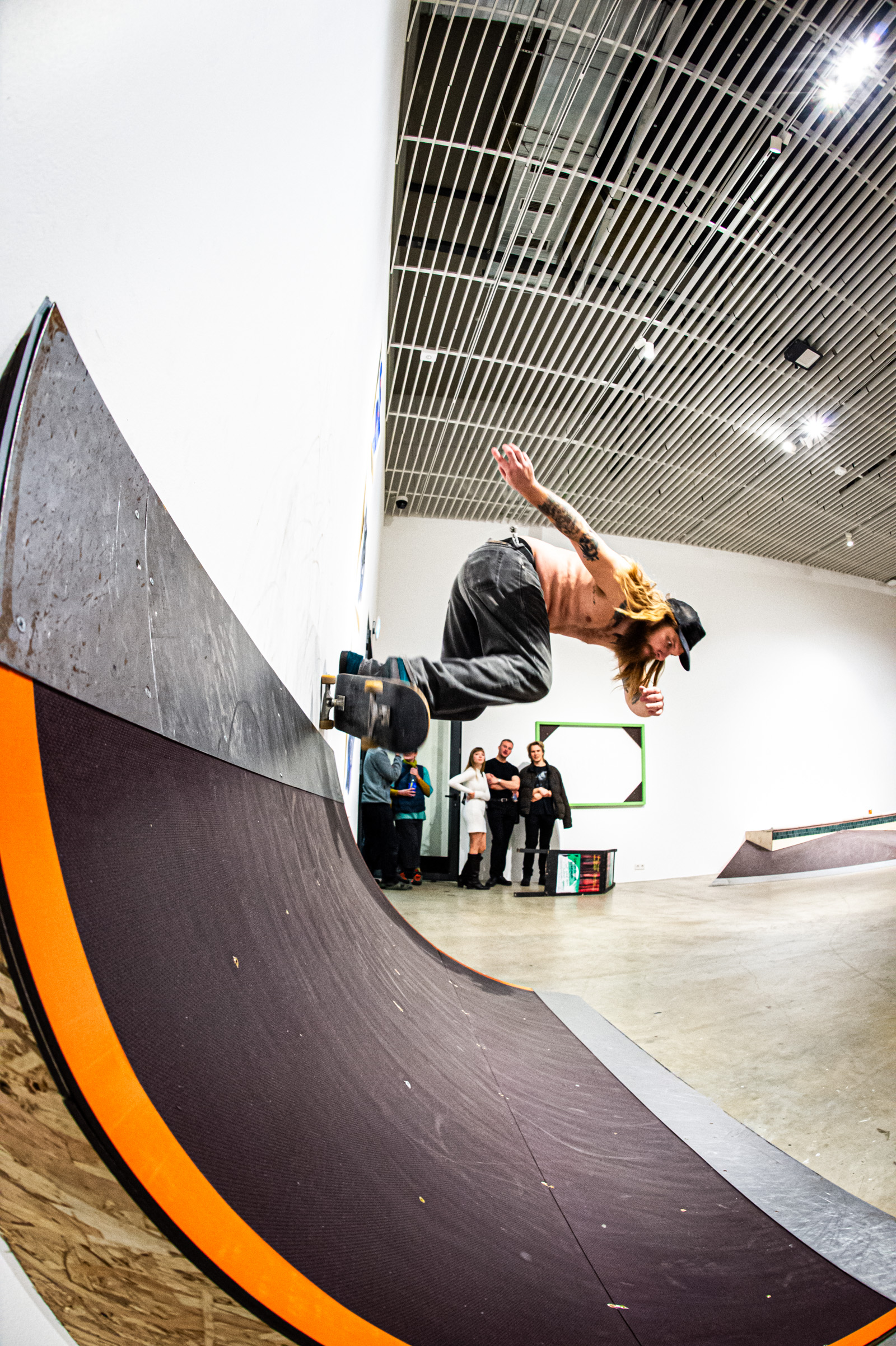
Jaagup Mägi wall-ride.
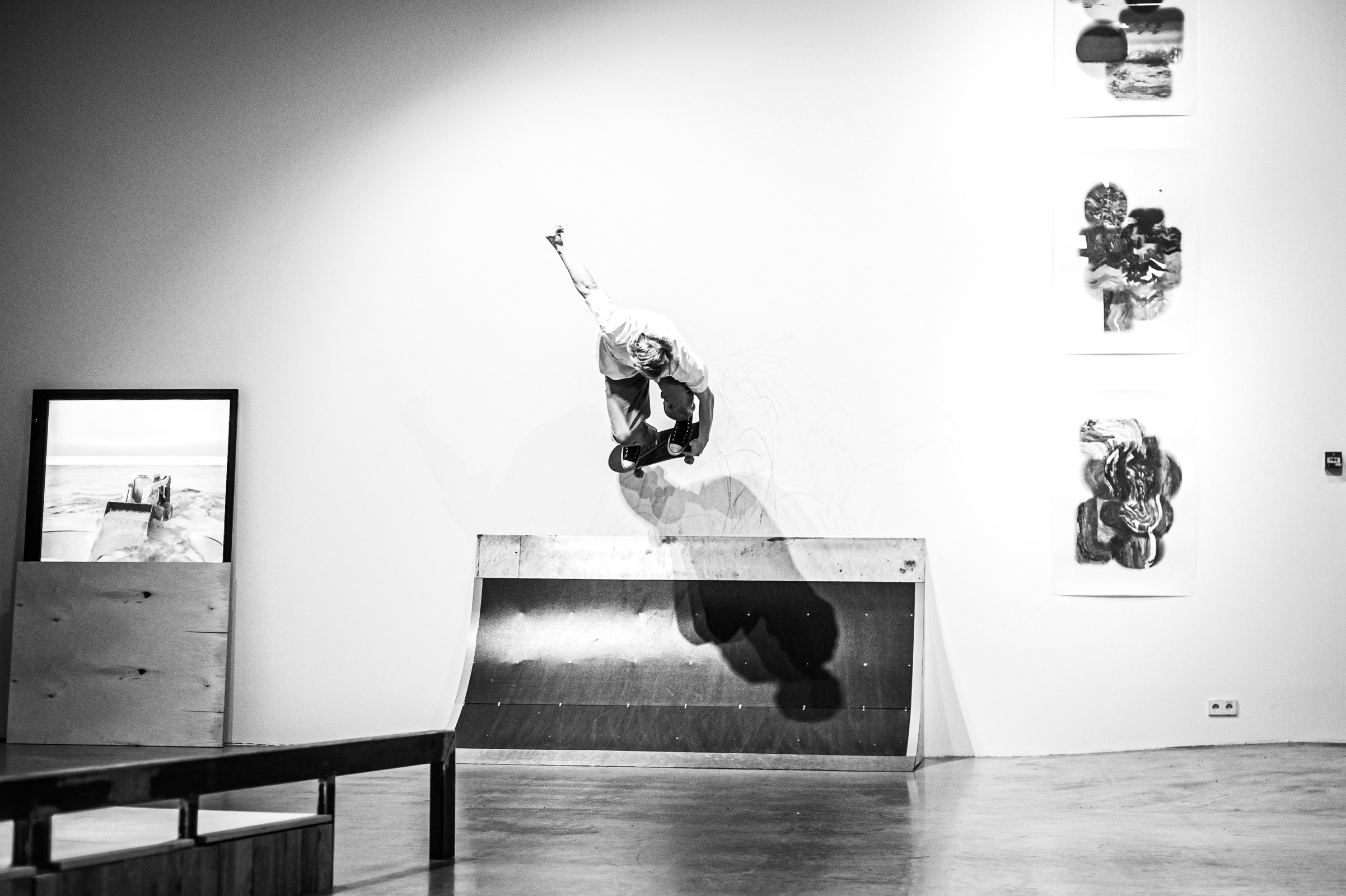
Scenic view with Meelis Erm.
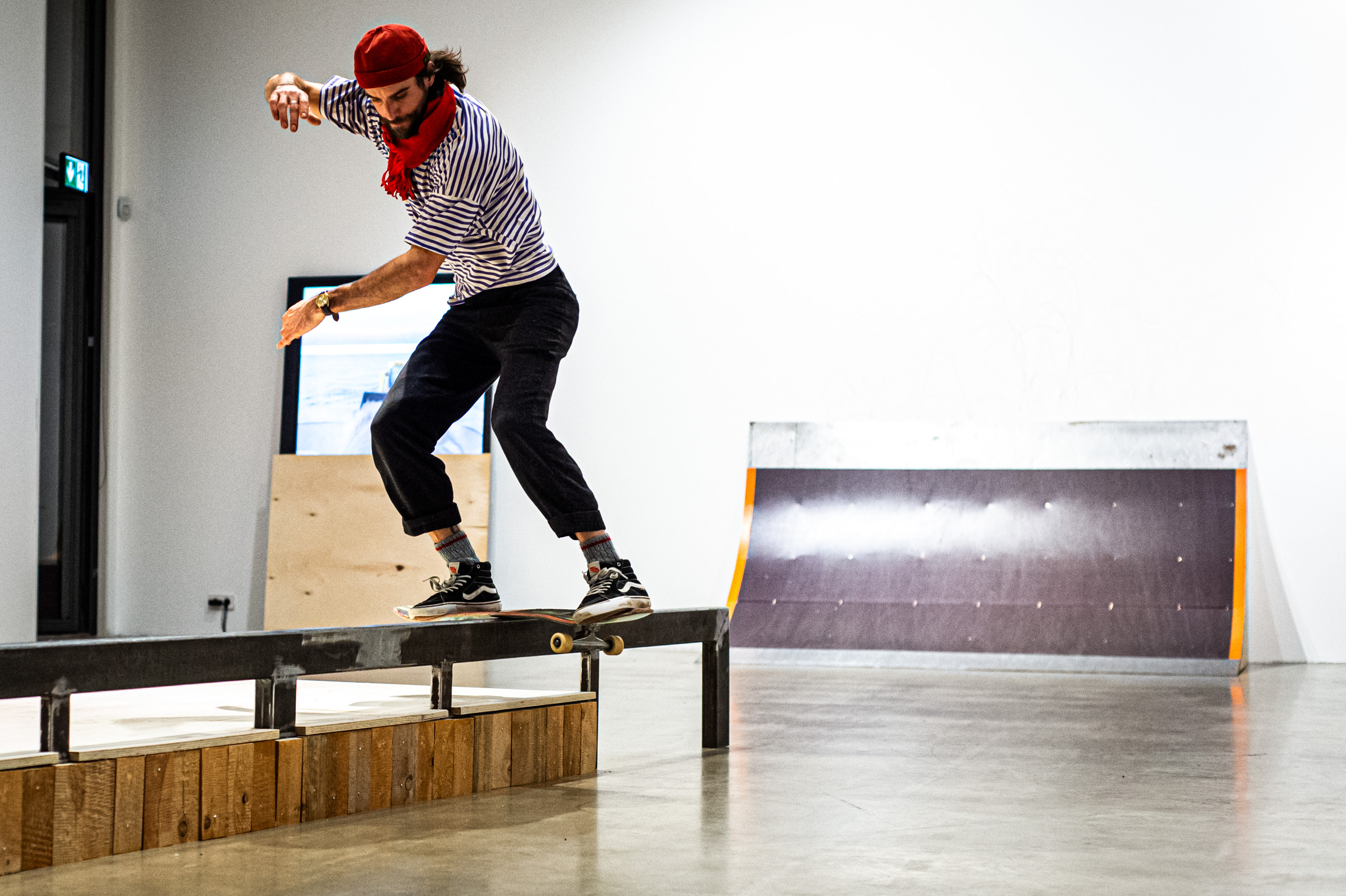
Éric-Olivier Thériault
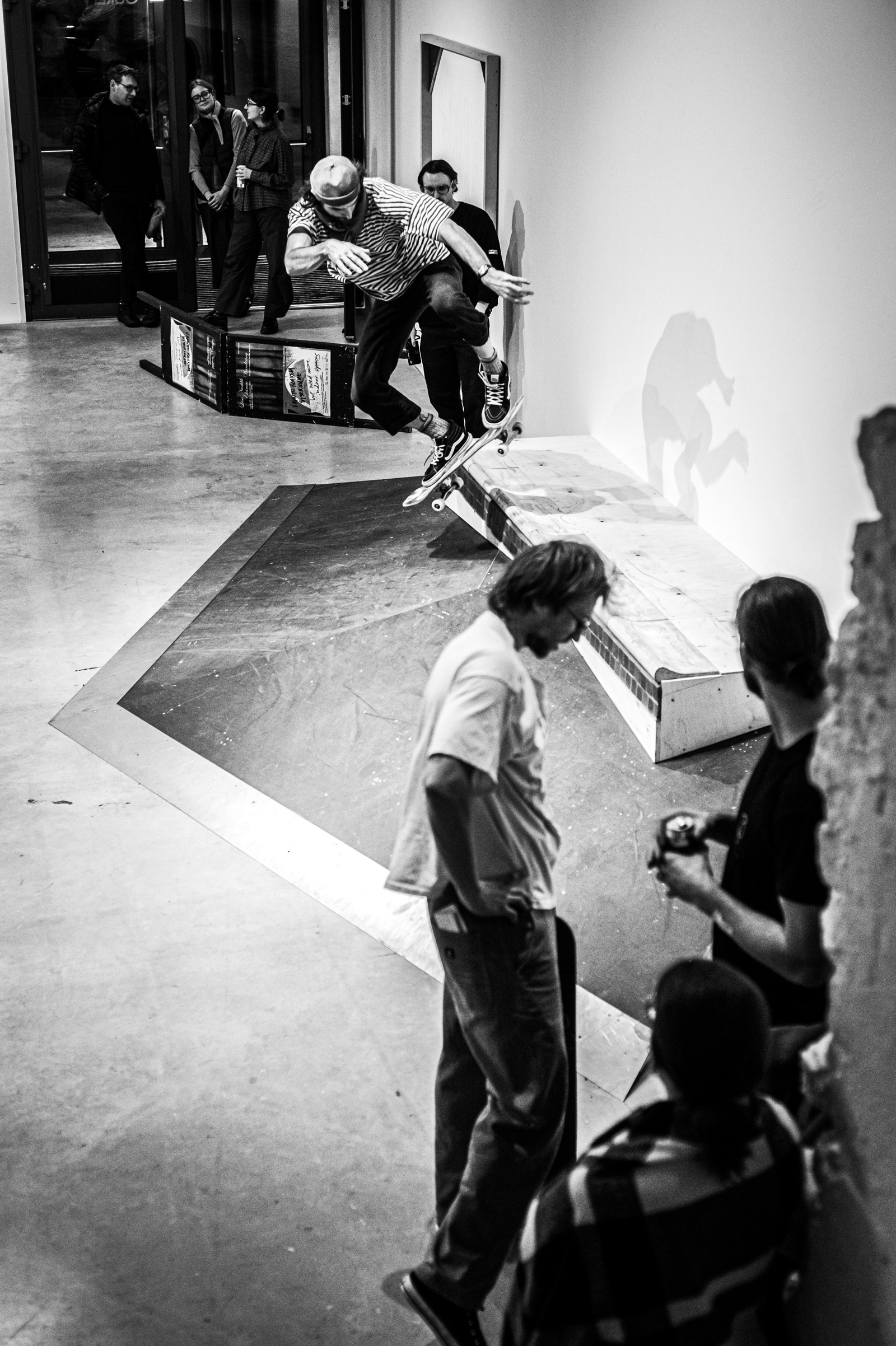
Éric-Olivier Thériault.
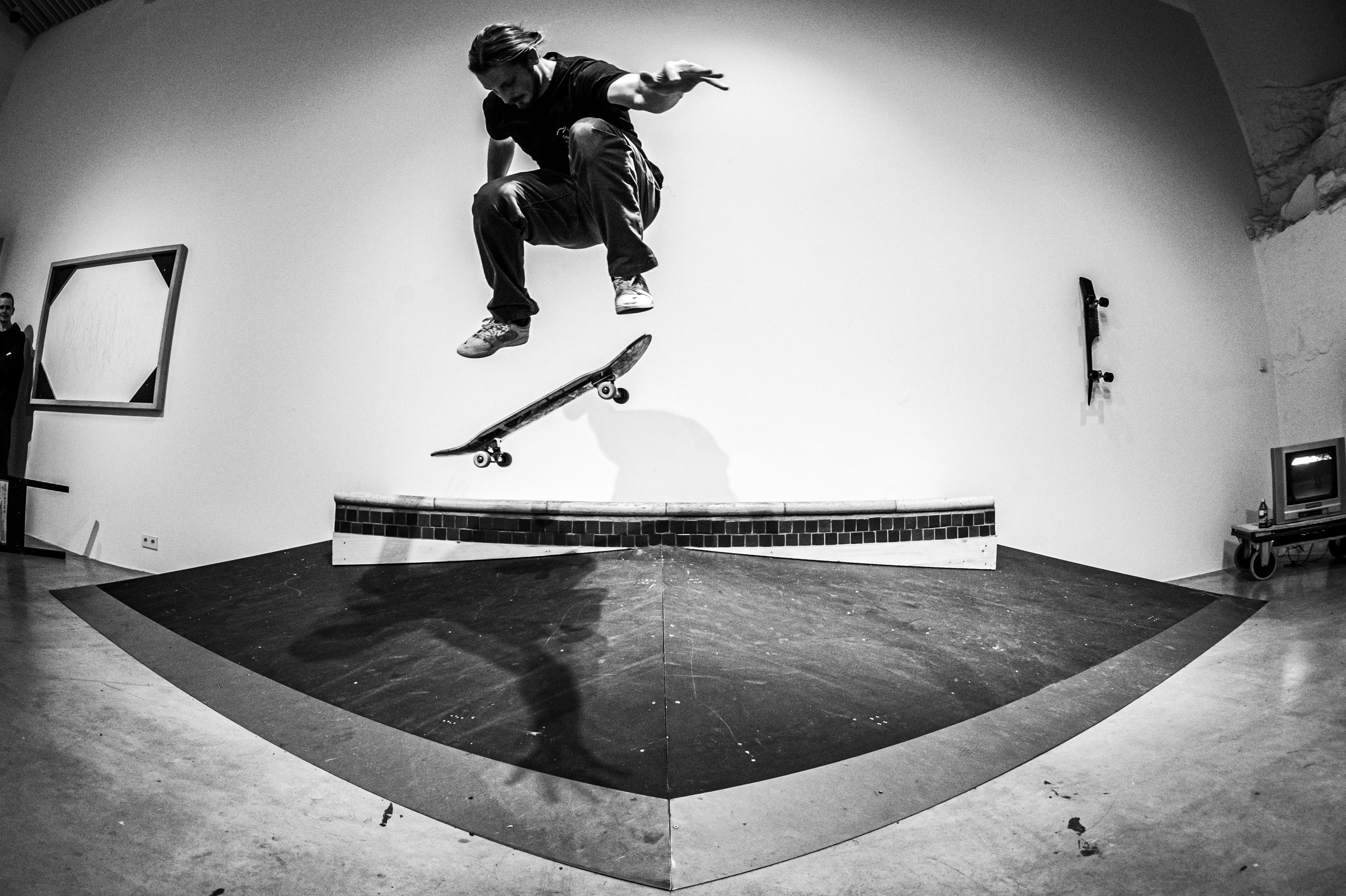
Siim Sild.
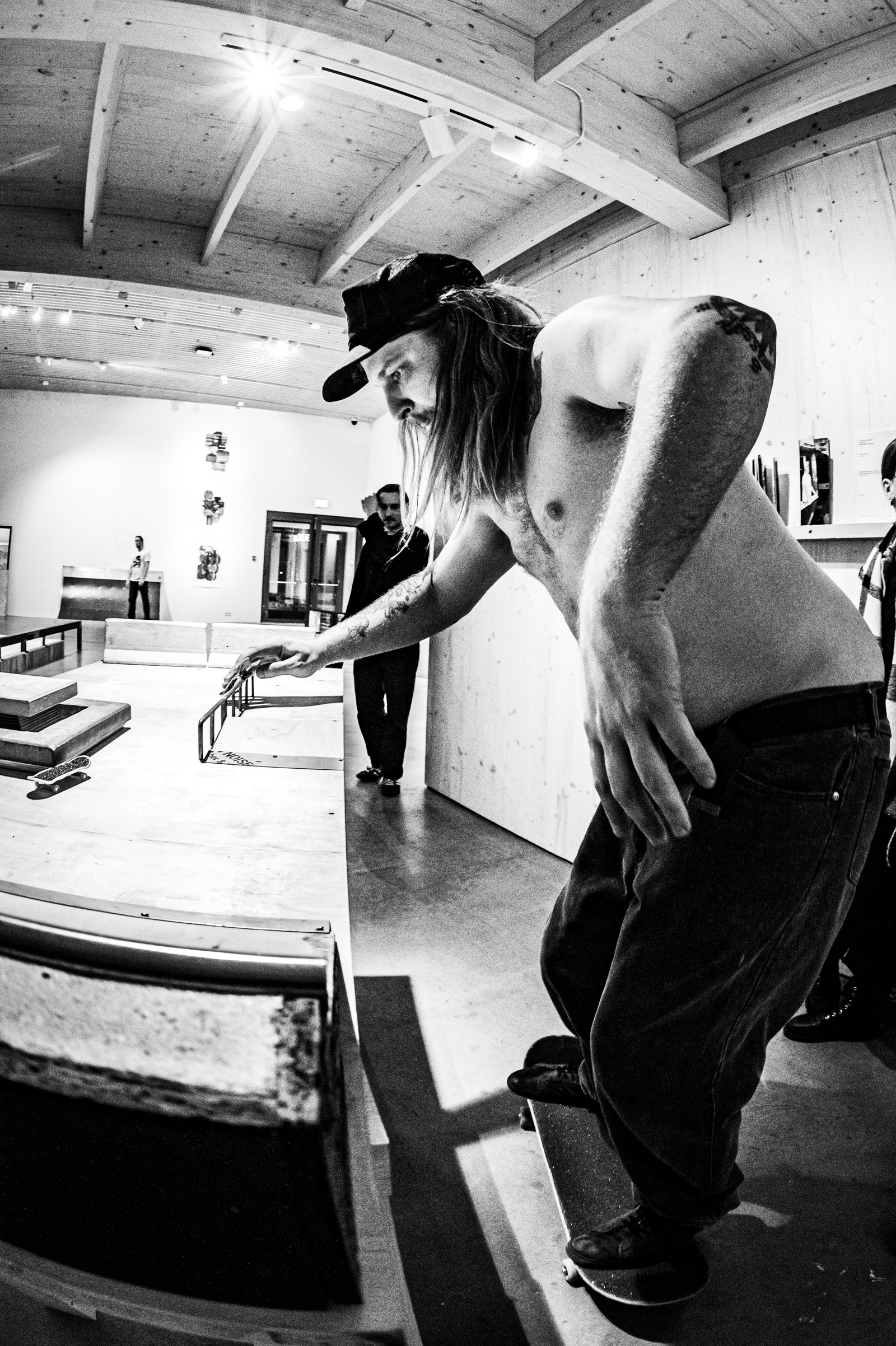
Jaagup Mägi at all front !
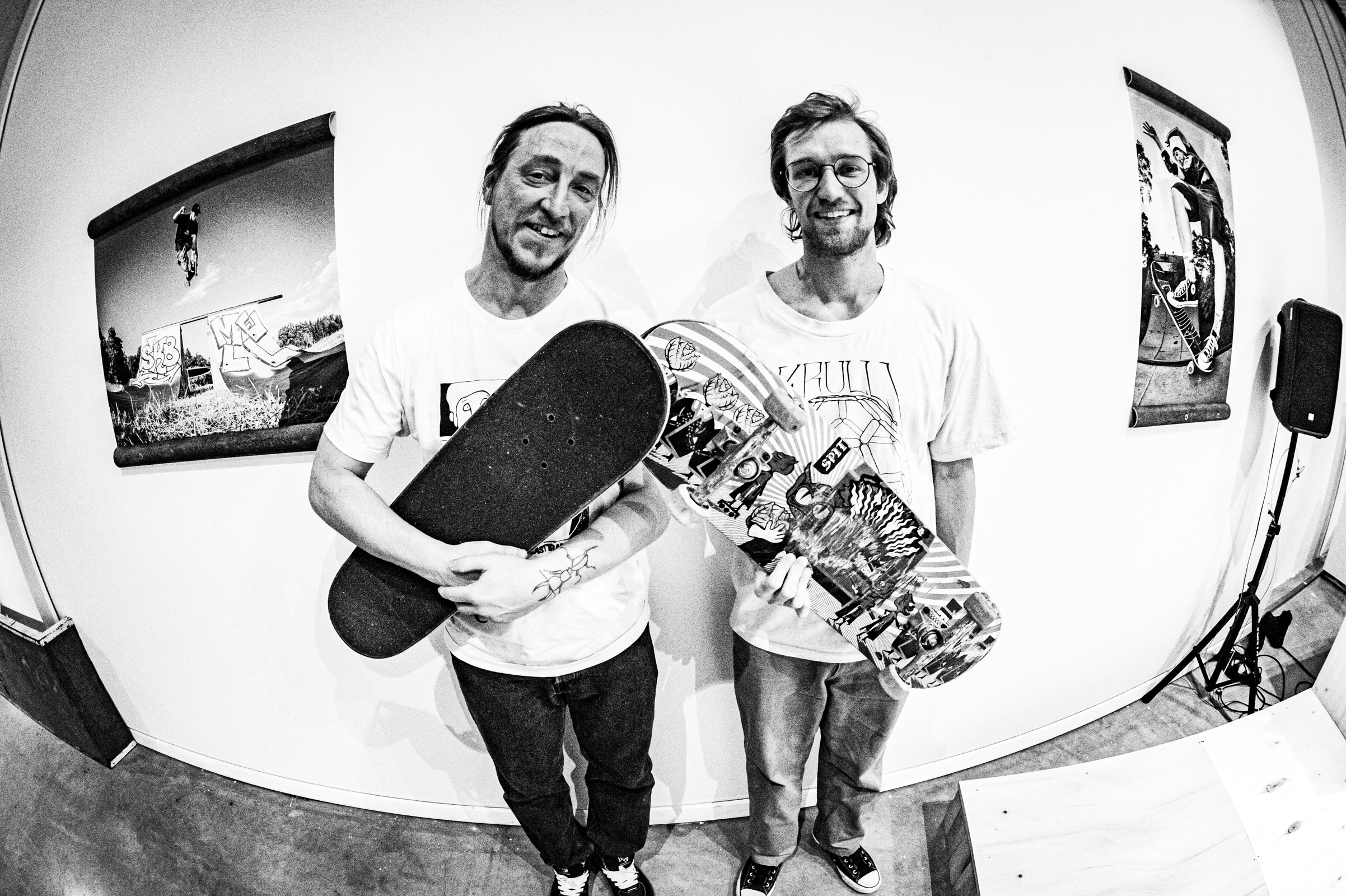
Do we see double ? Maik Grüner and Meelis Erm.
Leave a Reply
You must be logged in to post a comment.